1. Executive Summary
This report focuses on the segmented market of fiber-optic HDMI, DisplayPort (DP), and USB high-speed transmission cables in Germany, comprehensively analyzing the market size, supply and demand structure, product category characteristics, policy impacts, competitive landscape, and future development trends from 2025 to 2026. As the core of Industry 4.0 in Europe and a benchmark market for consumer electronics and high-end audio-visual products, Germany is the largest single-demand market for audio-visual and industrial transmission cables in Europe. Compared with traditional copper cables, fiber-optic cables feature lossless long-distance transmission, electromagnetic interference resistance, high bandwidth, and low attenuation, with continuously increasing penetration in Germany’s high-end audio-visual, industrial automation, medical equipment, commercial display, and e-sports entertainment scenarios.
In 2025, Germany’s overall wired interface cable market scale ranks first in Europe. Among them, the HDMI cable market size reached 42 million US dollars and is expected to grow to 81.6 million US dollars by 2034, representing a compound annual growth rate (CAGR) of 7.9%. Benefiting from the large stock of PC terminals and industrial display demand in Germany, DP cables have become a core consumer market in Europe. Driven by the implementation of the EU Universal Charger Regulation, fiber-optic USB and Thunderbolt cables have achieved a significant increase in market growth rate. The overall industry presents the core characteristics of high-end upgrading, compliance standardization, fiber replacement for copper cables, and dual-driven growth of industry and consumption.
2. Macroeconomic and Market Environment Analysis
2.1 Economic and Industrial Environment
Germany boasts a robust economy with highly developed industrial manufacturing, high-end consumer electronics, audio-visual media, and medical equipment industries, providing solid application scenarios for high-speed transmission cables. As the birthplace of Industry 4.0, Germany’s industrial equipment, intelligent robots, and automated production lines generate strong demand for high-stability, anti-interference long-distance transmission cables. Meanwhile, German residents have strong purchasing power, and the high penetration rate of high-end TVs, e-sports devices, home theaters, and commercial large screens in Germany further drives the consumption demand for high-definition fiber-optic cables.
Currently, the household penetration rate of HDMI devices in Europe exceeds 75%. Germany, the UK, and France account for more than 60% of European demand for audio-visual cables, with Germany serving as the core growth pole of the region. The market demand is gradually upgrading from traditional short-distance copper cables to long-distance, high-bandwidth, anti-interference fiber-optic cables.
2.2 Core Policies and Regulatory Barriers
Germany imposes stringent market access standards for the cable industry. Policies directly determine product entry thresholds and iteration directions, serving as core barriers for enterprises entering the market:
- EU Universal Charger Directive: The mandatory unification of the USB-C interface standard comprehensively promotes the replacement of traditional cables with high-speed fiber-optic USB-C and Thunderbolt 3/4 cables, booming the demand for fiber-optic USB cables and accelerating the phase-out of low-end non-standard cables.
- CPR Construction Fire Safety Certification: Mandatory compliance with EU fire protection grade standards for cables used in commercial, engineering, and building wiring scenarios. Fiber-optic cables are more suitable for engineering scenarios due to their flame-retardant, low-smoke, and high-safety properties.
- EMC Electromagnetic Compatibility Directive: Industrial, medical, and precision electronic equipment in Germany require cables with high anti-interference performance. Fiber-optic cables have inherent compliance advantages over copper cables with their non-electromagnetic interference and lossless signal transmission features.
- Green Environmental Protection Regulations: Strict implementation of RoHS and REACH directives restricts the use of harmful substances in cables, forcing the industry to phase out low-quality copper products and promote the popularization of high-quality, eco-friendly fiber-optic cables.
2.3 Technological Iteration Trends
Current technological iteration in the market focuses on high bandwidth, high refresh rate, and long-distance transmission, with HDMI 2.1, DP 2.1, and USB4/Thunderbolt 4 becoming the mainstream upgrading directions. High-end commercial display, e-sports, and industrial vision equipment in Germany are generally adapted to 4K/8K and high-frame-rate transmission requirements. Traditional copper cables are prone to signal attenuation, stuttering, and interference in long-distance transmission over 10 meters, while fiber-optic cables perfectly meet the needs of long-distance engineering wiring, high-end audio-visual, and industrial precision transmission scenarios, with expanding replacement space.
3. Current Situation of Segmented Fiber Cable Markets in Germany (Fiber HDMI / DP / USB)
3.1 Fiber-Optic HDMI Cable Market
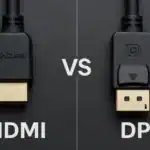
HDMI cables are the most in-demand high-definition transmission cable category for consumer and commercial scenarios in Germany. In 2025, Germany’s HDMI cable market size reached 42 million US dollars, accounting for 11% of the European market share. It is expected to reach 81.6 million US dollars by 2034, with a CAGR of 7.9% from 2025 to 2034, higher than the European average growth rate.
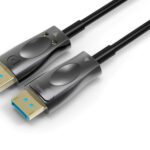
In terms of demand structure, over 35% of new TVs in Europe are equipped with HDMI 2.1 interfaces. Germany has a higher penetration rate of high-end TVs, home theaters, projectors, and commercial splicing screens, with expanding scenarios of 8K ultra-high-definition audio-visual and 120Hz+ high-refresh e-sports. Fiber-optic HDMI 2.1 cables, featuring lossless long-distance transmission over 10 meters, are widely used in villa audio-visual systems, exhibition hall wiring, hotel engineering, radio and television media, and other scenarios, gradually replacing traditional long-distance copper HDMI cables. Copper cables still dominate short-distance scenarios, but high-end consumer groups are increasingly accepting fiber-optic cables for their lightweight and low-interference advantages.
3.2 Fiber-Optic DisplayPort (DP) Cable Market
Germany is the largest single-country market for DP cables in Europe with stable and solid demand. Currently, Germany has an active PC terminal stock of 40 to 45 million units with an equipment replacement cycle of 3 to 5 years, continuously generating stable new and replacement demand for DP cables. Unlike HDMI cables focusing on home audio-visual use, DP cables are mainly applied in commercial office, multi-screen splicing, industrial displays, desktop e-sports devices, and medical imaging equipment.
Industrial scenarios serve as the core increment of Germany’s fiber-optic DP cable market. Industrial automated production lines, machine vision inspection, and precision instrument display equipment have extremely high requirements for signal stability, electromagnetic interference resistance, and long-distance transmission. Fiber-optic DP cables can effectively avoid electromagnetic interference in industrial environments, making them essential products for high-end industrial scenarios. At present, Germany’s DP market is highly import-dependent. Local enterprises focus on brand operation, standard formulation, and regional distribution, while mass manufacturing is almost undertaken by Asian manufacturers from China and Vietnam.
3.3 Fiber-Optic USB & Thunderbolt Cable Market
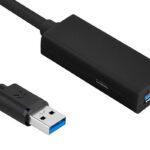
Driven strongly by the EU Universal Charger Regulation, Germany leads Europe in the standardized and high-speed upgrading of USB interface cables. Traditional USB2.0/3.0 copper cables are gradually replaced by USB4, Thunderbolt 3/4 fiber-optic cables, which are widely used in high-end laptops, mobile workstations, high-speed peripherals, industrial data acquisition, and high-definition camera transmission scenarios.
Germany’s industrial digital transformation, iterative upgrading of enterprise office equipment, and popularization of high-end e-sports peripherals fuel the growing demand for high-speed fiber-optic USB cables. This product category presents a pattern of “universal popularization in consumer scenarios and high-end incremental growth in industrial scenarios”. Short-distance USB-C copper cables meet daily charging needs, while long-distance, high-rate, low-interference fiber-optic USB cables dominate high-end scenarios including industry, commerce, and professional offices.
4. Supply-Demand Pattern and Industrial Chain Analysis
4.1 Industrial Chain Structure
- Upstream Raw Materials: Optical fiber cores, light-transmitting components, high-end interface chips, and shielding components. Core raw materials and chips are mainly supplied by Asian supply chains, with no large-scale production capacity in Germany.
- Midstream Manufacturing: Almost fully import-dependent. Manufacturers from China and Vietnam occupy a dominant position, undertaking large-scale production, assembly, and testing of fiber-optic cables with outstanding cost and capacity advantages.
- Downstream Distribution and Branding: German local enterprises dominate the regional market with a core model of “OEM import + local brand operation + compliance certification + regional distribution”, focusing on channel layout, after-sales service, and quality control in the DACH (Germany, Austria, Switzerland) region.
4.2 Supply Characteristics
Germany has almost no large-scale cable manufacturing capacity locally, with over 95% of fiber-optic HDMI/DP/USB cables relying on imports. The market supply is clearly stratified: low-end low-cost copper cables are mainly low-priced unbranded Asian products; mid-range compliant products are regional brand products OEM-manufactured by Asian factories; high-end industrial, medical, and broadcast-grade fiber-optic cables are supplied by leading compliant manufacturers with complete CE, CPR, and EMC certifications, enjoying high premium margins.
4.3 Demand Characteristics
- Hierarchical Demand Structure: Consumer scenarios prioritize cost performance and compliance, while commercial engineering and industrial scenarios focus on product stability, certification qualifications, and long-distance transmission performance.
- Significant Premium for Long-Distance Fiber Products: The penetration rate of fiber-optic products exceeds 60% in cable scenarios over 10 meters, with copper cables gradually phased out due to signal defects.
- Compliance as a Hard Threshold: Products without EU certifications cannot enter formal supermarket, engineering, and government procurement channels in Germany.
5. Market Competitive Landscape
The competition in Germany’s fiber-optic transmission cable market is characterized by hierarchical competition, stable pattern, and shortage of high-end products, with no absolute monopolistic enterprises and significant differences in competition across price segments.
5.1 Hierarchical Competition Structure
- High-End Industrial/Professional Grade: Dominated by European and American professional cable brands, featuring full certifications, high stability, and industrial-grade anti-interference performance. With high pricing and gross profit margins, these products focus on high-end scenarios such as medical treatment, broadcast media, and industrial automation with low market competition pressure.
- Mid-Range Mainstream Compliant Grade: Occupying the largest market share, mainly including German local regional brands and cross-border leading brands with Asian OEM production. Balancing cost performance and compliance, these products are suitable for supermarkets, home decoration, and general commercial scenarios with the most intense market competition.
- Low-End Budget Grade: Uncertified unbranded low-cost copper products, mainly sold through low-price online channels. Their market share continues to shrink under the pressure of policy regulation and consumption upgrading.
5.2 Core Competitive Barriers
The core competitive barriers in the German market are not price-oriented, but focus on compliance certification, quality stability, channel qualifications, and local standard adaptation. Manufacturers with complete CE, CPR, EMC, and RoHS certifications and stable supply capacity of high-end fiber-optic products (HDMI 2.1, DP 2.1, USB4) have strong market competitiveness. In addition, German consumers attach great importance to product durability and safety standards, resulting in an extremely low repurchase rate for low-quality products and forming a prominent word-of-mouth barrier.
6. Market Driving and Restricting Factors
6.1 Core Driving Factors
- Technological Iteration and Upgrading: The popularization of 8K ultra-high-definition, high-refresh e-sports, multi-screen display, and industrial vision equipment drives the upgrading of transmission cables towards high bandwidth and low attenuation, increasing the rigid demand for fiber-optic cable replacement.
- Mandatory EU Policy Upgrading: A series of regulations including universal charger standards, fire protection, environmental protection, and electromagnetic compatibility accelerate the phase-out of low-end non-standard products, benefiting high-end compliant fiber-optic products.
- Sustained Implementation of Industry 4.0: The iteration of industrial automation and intelligent equipment in Germany drives incremental demand for industrial-grade long-distance, high-stability fiber-optic transmission cables.
- Consumption Upgrading Trend: German consumers have high requirements for audio-visual experience and equipment stability, making fiber-optic lossless transmission cables the preferred choice for high-end home decoration and commercial engineering projects.
6.2 Major Restricting Factors
- High Product Pricing: Fiber-optic cables have higher production costs than traditional copper cables, leading to higher terminal prices and slowing down replacement penetration in short-distance consumer scenarios.
- Stringent Market Access Thresholds: Complete EU certification involves long cycles and high costs, making it difficult for small and medium-sized manufacturers to quickly enter the formal market.
- Insufficient Market Cognition: Ordinary consumers lack awareness of the performance advantages of short-distance fiber-optic cables and tend to choose low-cost copper products.
7. Market Trend Forecast (2026-2030)
- Accelerated Fiber Replacement and Full Penetration in Long-Distance Scenarios: In the next five years, the long-distance cable market (over 10 meters) for HDMI, DP, and USB will basically complete fiber-optic replacement; the penetration rate of fiber-optic cables in short-distance scenarios (within 5 meters) will continue to rise in high-end consumer and commercial markets.
- High-End Interface Specifications Become Mainstream: HDMI 2.1, DP 2.1, and USB4/Thunderbolt 4 will gradually replace old-spec products, eliminating outdated low-speed cables and bringing new market increments and premium space through high-end iteration.
- Industrial Scenarios Become Core Growth Drivers: Different from the ordinary consumer market, the demand growth rate of fiber-optic transmission cables in Germany’s industrial, medical, and precision instrument fields will continue to exceed that of the civilian market, becoming the core growth point of the industry.
- Fixed Trends of Compliance and Branding: Uncertified unbranded products will continue to exit the market. Brands with complete EU certifications, stable quality control, and localized after-sales services will continuously seize market share, leading to a slight increase in industry concentration.
- Release of DACH Regional Integrated Channel Dividends: As the core of the DACH region, Germany enables leading brands to radiate the entire Central European market through local channels, enhancing regional market linkage.
8. Market Opportunities and Market Entry Suggestions
8.1 Core Market Opportunities
- Blue Ocean Market for High-End Long-Distance Fiber Cables: Long-distance fiber-optic products for engineering wiring, commercial large screens, industrial vision, and high-end audio-visual scenarios are in short supply, with low competition pressure and high gross profit margins.
- Incremental Track of USB4/Thunderbolt Fiber Cables: Driven by the EU Universal Charger Regulation, high-speed fiber-optic USB cables have huge replacement space and will become the fastest-growing segmented category in the future.
- Demand for Customized Industrial-Grade Products: German industrial scenarios have customized demand for anti-interference, high-temperature resistant, and high-stability fiber-optic cables. Differentiated products can effectively avoid homogeneous price competition.
8.2 Core Suggestions for Enterprise Market Entry
- Prioritize Completing Compliance Certifications: Preemptively complete full EU certifications including CE, CPR, EMC, and RoHS to access core channels such as supermarkets, engineering projects, and government procurement.
- Implement Differentiated Product Layout: Focus on long-distance, high-spec, industrial-grade fiber-optic HDMI/DP/USB cables to avoid homogeneous price competition in low-end copper cable markets.
- Deepen Regional Channel Layout: Rely on the core German market to radiate Austria and Switzerland (DACH region), and build localized distribution and after-sales service systems.
- Follow Technological Iteration Rhythm: Prioritize the launch of the latest-spec products including HDMI 2.1, DP 2.1, and USB4 to seize high-end iteration dividends.
9. Conclusion
The German fiber-optic HDMI, DisplayPort, and USB cable market is in a golden development stage featuring steady growth, structural upgrading, and high-end market expansion. As Europe’s largest high-end transmission cable consumer market, Germany benefits from dual demand dividends of consumption and industrial upgrading. Policies drive the standardization and high-end development of the industry, low-end production capacity continues to be phased out, and the fiber replacement trend is clear and irreversible.
The core market opportunities are concentrated inlong-distance engineering scenarios, high-end industrial scenarios, and USB4 high-speed iteration scenarios. Compliant, high-quality, high-spec fiber-optic products maintain sustainable premium capabilities and growth potential. For export manufacturers, the German market has high entry thresholds but a benign competition pattern, stable demand, and considerable profits, serving as a core breakthrough for deploying the European high-end cable market.